Roll Formed Hat and C Channel Fence Posts
Hat channel fence posts are only used in the weak axis, excluding corners, but C channel posts can be used in both the strong and weak axis. In the weak axis, there is a strong and weak direction, but as the wind will blow both ways, the post tables only consider the weak direction of the weak axis.
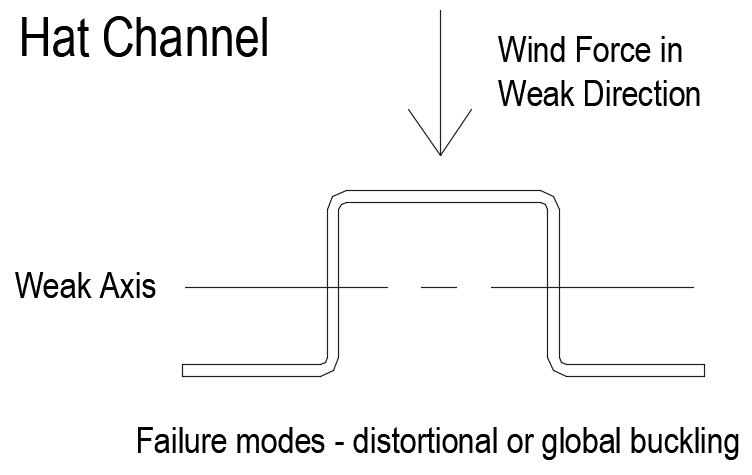
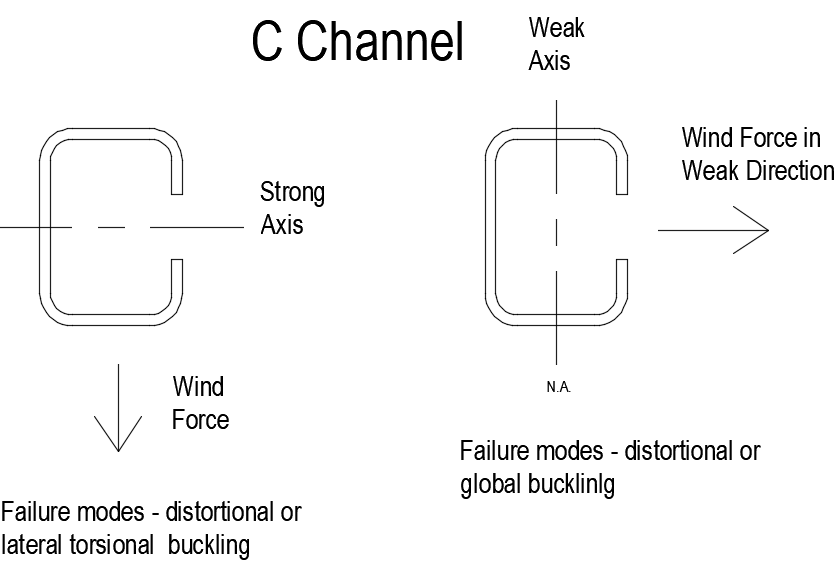
.
Open sections like hat and C channels are inherently less stable than closed sections like circular and square tubes. Open sections have a tendency to buckle before they reach their full strength if their compression flanges are not fully braced.
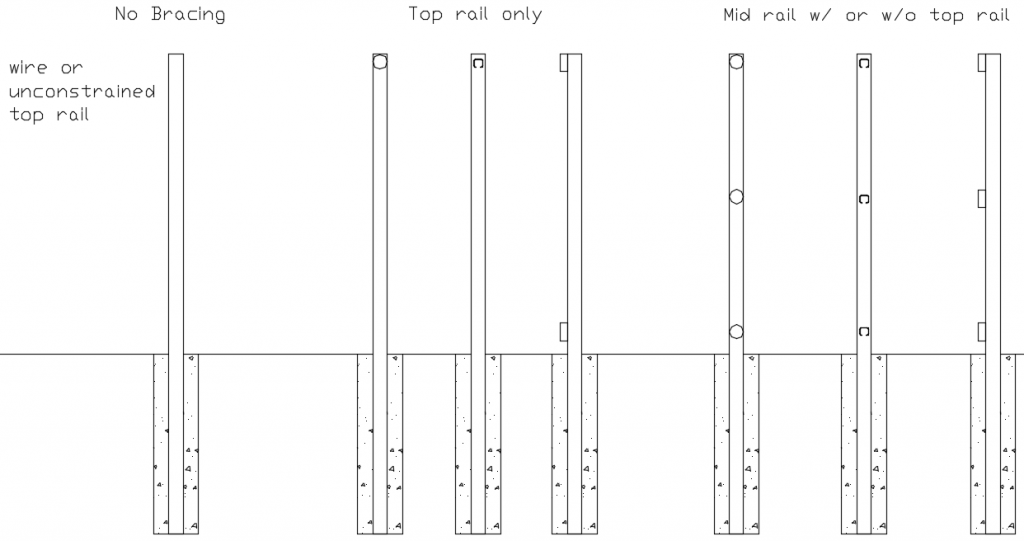
Bracing of the compression flanges increases the strength of the post, but it depends on the design of the rails. Rails that are solidly attached to the compression flanges and prevent them from rotating can be counted as braces.
The post tables provide strength values for unbraced posts, post braced at the top, and posts braced at the midpoint. As the bending force on the post increases as you get closer to the ground, top bracing is ignored if there is a middle brace. Bottom rails do not have much bracing effect as they are close to the base so they can be ignored.
Wires, continuous top rails running through loop caps or loosely captured rails do not laterally brace the posts.
This guide uses the shape, gauge and largest width to identify the different roll formed channels.
Hat and C Channel Fence Post Geometries
Next – Footing Design